-
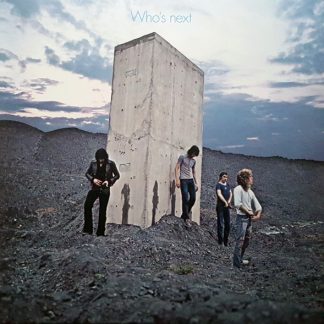 USEDPolydor, Track Record, Universal Music Catalogue
Who’s Next
₹800.00Who's Next by The Who, released on Polydor, Universal Music Catalogue, Track Record (2015-03-23). Format: LP. ℗ 1971 Polydor Ltd.... -
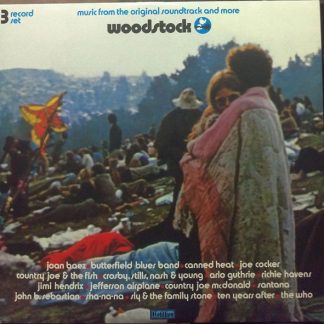 USEDCotillion
Woodstock – Music From The Original Soundtrack And More
₹4,000.00Woodstock - Music From The Original Soundtrack And More by Various, released on Cotillion (2020). Format: LP. Made in the...
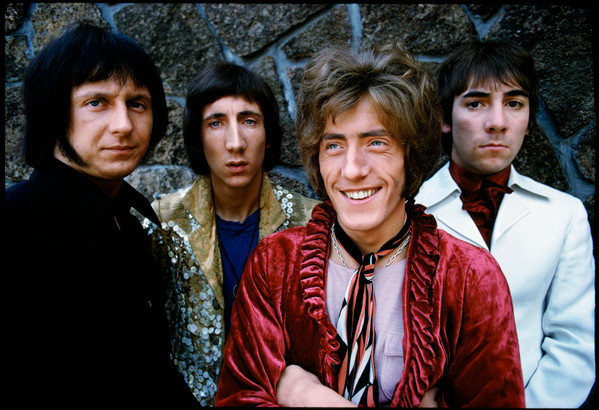
The Who
English rock band formed in Shepherd's Bush, London, England, in 1964.
They are considered to be one of the most influential rock bands of all time, and have sold an estimated 100 million records worldwide. They set the Guinness world record on May 31, 1976, for loudest concert, at 126 decibels. Inducted into Rock & Roll Hall Of Fame in 1990 (Performer).
Known for their involvement in the 1960s British mod movement, the smashing of their instruments, their development of the rock opera genre, and as innovators in rock music performance and instrumentation, including the integration of synthesizers, the development of the "Marshall Stack" amplifier design, and advancements in concert sound reinforcement (PA) and visual presentation (stage lighting and lasers).
[b]History[/b]
Originally called The Detours, which was formed March 1959 by Roger Daltrey (from his 1958 skiffle band The Sulgrave Rebels), later joined by John Entwistle in September 1961, who then recruited Pete Townshend (the two were school friends and former bandmates in trad jazz band The Confederates and rock group The Scorpions) in February 1962. In February 1964, they changed their name due to similarly named Johnny Devlin and the Detours from Liverpool. Pete Townshend's flatmate [a=Richard Barnes (4)] came up with the name "The Who," and Helmut Gorden became their manager/promoter. In April 1964, Keith Moon replaced previous drummers Doug Sandom and Dave Golding, and publicist [a=Peter Meaden] became the manager and renamed the band as "[a=The High Numbers]" to join the Mod movement. They released "Zoot Suit / I'm The Face" on Fontana, but it failed to chart, and Meaden was replaced by [a=Kit Lambert] and [a=Chris Stamp] as managers. In November 1964, the name was changed back to "The Who," and the group started a residency at London's [l=Marquee Club], under the theme of "Maximum R&B," which solidified their following. Released their first single as The Who, "I Can't Explain" on Brunswick on January 15, 1965, produced by Shel Talmy, and their first LP, "My Generation" in December 1965. In 1966, they split with Talmy, who successfully sued the group, and signed with Polydor, on the Reaction label. Their second album titled "A Quick One" (re-titled "Happy Jack" in the U.S., released on Decca) featured their first "mini-opera." The single "Happy Jack" resulted in their first U.S. chart success in 1967, at which point they first toured the U.S., and in June, played the Monterey International Pop Festival. Their third album, "The Who Sell Out," was a concept album in tribute to England's pirate radio stations, released on Lambert and Stamp's newly formed [l=Track Record] label, and achieved a top 10 hit with "I Can See For Miles." In 1969, they released a full rock opera, "Tommy," and achieved mainstream success, performing at the Woodstock festival. Their next album, "Who's Next," in 1971, was culled from an aborted rock opera called "Lifehouse," and produced by Glyn Johns instead of Lambert and Stamp. Followed by another rock opera, "Quadrophenia," in 1973. At which point the group split from Lambert and Stamp, and focused on solo careers and filmmaking. They released two more albums, but Keith Moon died following the release of Who Are You. Replaced by [a=Small Faces]/[a=Faces (3)] drummer Kenney Jones, and added a keyboardist, Rabbit Bundrick, and occasionally toured with a horn section. The band signed with Warner Bros. and released two more albums, and following a North American farewell tour in 1982, broke up in 1983. Reunited in July 1985 for Live Aid; 1988 for a Brit Awards performance; 1989, for a 25th anniversary tour with a 12-piece backing band, recording two songs for Townshend's solo album "[m=79719]"; 1991 to record a cover of Elton John's "Saturday Night's Alright For Fighting"; 1994 for Daltrey's 50th birthday concerts; 1996 for the Prince's Trust concert, which led to a Quadrophenia revival tour through 1997, with Zak Starkey on drums; 1999 again as a five-piece, until John Entwistle died on the eve of its 2002 American tour, and Pino Palladino became the bassist. In 2006, they released a new mini-opera then a new album, "Endless Wire," with [a=Peter Huntington] on drums, and continued touring, releasing another new album, "Who," in 2019, and toured with an orchestra; Starkey was dismissed in early 2025, replaced by Scott Devours, who had previously filled in on drums in 2013 and was a member of Daltrey's solo touring band. In 2025, undertook another North American farewell tour called "The Song Is Over."
[b]Members[/b]
[i]As The Detours/Dale Angelo and the Detours[/i]
Colin Dawson – lead vocals (1959–1963)
Gabriel "Gabby" Connolly – lead vocals (1963)
Roger Daltrey – lead guitar (1959–1961), rhythm guitar (1961–1963), lead vocals (1963–1964)
Peter James – rhythm guitar (1961–1962)
Reg Bowen – rhythm guitar (1962)
Roy Ellis – rhythm guitar (1961–1962)
John Entwistle – bass guitar, horns (1961–1964)
Pete Townshend – rhythm guitar (1962–1963) lead guitar (1964)
Harry Wilson – drums (1961–1962)
Doug Sandom – drums (1962–1964)
[i]Founding members:[/i]
Roger Daltrey – lead vocals
Pete Townshend – guitar, vocals, keyboards
John Entwistle – bass guitar, horns, vocals (1964–2002)
[i]Former members:[/i]
Doug Sandom – drums (1964)
Keith Moon – drums (1964–1978)
[url=/artist/176121-Kenny-Jones]Kenney Jones[/url] – drums (1978–1988)
[i]Touring band musicians:[/i]
[a=John "Rabbit" Bundrick] – keyboards (1979–1981, 1989, 1996–2011)
[a=Howie Casey] – saxophone (1979–1980)
[a=Dick Parry] – saxophone (1979–1980)
[a=Dave Caswell] – trumpet (1979–1980)
[a=Reg Brooks] – trombone (1979–1980)
[a=Tim Gorman] – keyboards (1982)
[url=/artist/324401-Steve-Bolton]Steve "Boltz" Bolton[/url] – guitar (1989)
[a=Simon Phillips] – drums (1989)
[a=Jody Linscott] – percussion (1989, 1996–1997, 2025)
[a=Chyna] – backing vocals (1989)
[a=Cleveland Watkiss] – backing vocals (1989)
[a=Billy Nicholls] – backing vocals, musical director (1989, 1996–1997, 2019–2025)
[a=The Kick Horns]: [a=Simon Gardner], [a=Neil Sidwell], [a=Simon Clarke (2)], [a=Tim Sanders], [a=Roddy Lorimer] (1989)
[a=Simon Townshend] – guitar (1996–1997, 2002–2025)
[a=Zak Starkey] – drums (1996–2025)
[a=Jon Carin] – keyboards (1996–1997)
[a=Dennis Farias] – trumpet (1996–1997)
[a=Roy Wiegand] – trumpet (1996–1997)
[a=Nick Lane] – trombone (1996–1997)
[a=Pino Palladino] – bass (2002–2015)
[a=Brian Kehew] – keyboards (2006–2007)
[a=Morgan Nicholls] – bass (2012)
[a=Chris Stainton] – keyboards (2012)
[a=Frank Simes] – guitar, musical director (2012–2017)
[a=John Corey] – keyboards (2012–2017)
[a=Loren Gold] – keyboards (2012–2025)
[a=Dylan Hart] – horns (2012–2013)
[a=Reggie Grisham] – horns (2012–2013)
[url=/artist/3236345-JG-Miller]J. Greg Miller[/url] – horns (2012–2013)
[a=Jon Button] – bass guitar (2017–2025)
[a=Keith Levenson] – conductor (2019–2024)
[a=Audrey Q. Snyder] – cello (2019–2024)
[a=Emily Marshall (2)] – keyboards, conductor (2019–2024)
[a=Katie Jacoby] – violin (2019–2025)
[a=Randy Landau] – contrabass (2022–2024)
[a=Scott Devours] – drums (2025)
[a=John Hogg] – backing vocals (2025)
The Who